Orange Route
Walk through Delft and listen to the Podwalk
This walk is also available as a podwalk. Walk through Delft with your earphones and listen to the story.
Click here to go to the podwalk.
William of Orange was born in 1533 in Dillenburg, Germany. At the age of 11, he inherits many possessions and territories from his cousin René of Chalon, including the principality of Orange in southern France. This made William not only Count of Nassau, but also Prince of Orange.
In 1568, the Netherlands rebelled against their ruler Philip II, the k...
This walk is also available as a podwalk. Walk through Delft with your earphones and listen to the story.
Click here to go to the podwalk.
William of Orange was born in 1533 in Dillenburg, Germany. At the age of 11, he inherits many possessions and territories from his cousin René of Chalon, including the principality of Orange in southern France. This made William not only Count of Nassau, but also Prince of Orange.
In 1568, the Netherlands revolted against their ruler Philip II, king of Spain, partly because of his hard line in upholding the Catholic Church against rising Protestantism. Leading the revolt was William of Orange. Delft sided with the prince in 1572. This meant, among other things, that the Old and Nieuwe Kerk passed into 'reformed' hands. The ten monasteries that once numbered Delft were abolished. Most were demolished, some were spared and given another use. Many Catholics fled the city.
William of Orange did not feel safe in the indefensible The Hague and as Delft was the nearest fortified city, he sought refuge here. In 1572, the prince stayed with his family and court for the first time in the Prinsenhof, the former Sint-Agatha monastery, and it became one of his permanent residences in the Netherlands. From here, on behalf of the States General, he led the revolt against the Spanish rulers in what we now call the Eighty Years' War (1568-1648). The Oranges have left their mark on Delft since 1572. This walk takes you past the most important places and buildings.
You are going to see this
-
Huis van Delft – Oranjeroute
Huis van Delft – Oranjeroute (Stop 1 – Starting point)
This is the place where the past and the future meet. Where Delft’s history is preserved, recounted and recorded. Het Huis van Delft stands for ‘Creating History’. In this...
Huis van Delft
Houttuinen 6
2611DX Delft
Navigate to starting point
-
Nieuwe Kerk Oranje route
Nieuwe Kerk Oranje route (Stop 2)
The church was built between 1383 and 1510. The late-gothic cross basilica was dedicated to the holy virgin Mary, but was already given Saint Ursula as its second patron saint during construction.
markt 80
2611GW delft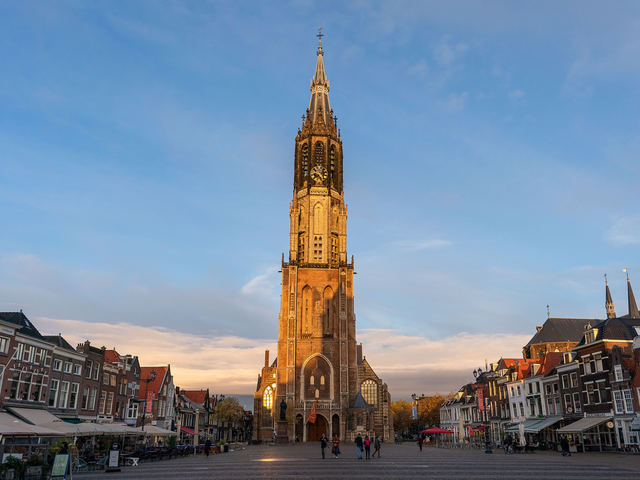
-
Hugo de Groot - Oranje Route
Hugo de Groot - Oranje Route (Stop 3)
The statue of Hugo de Groot was erected in 1886 in memory of Delft-born legal scholar and Remonstrant leader Hugo Grotius.
Markt
Delft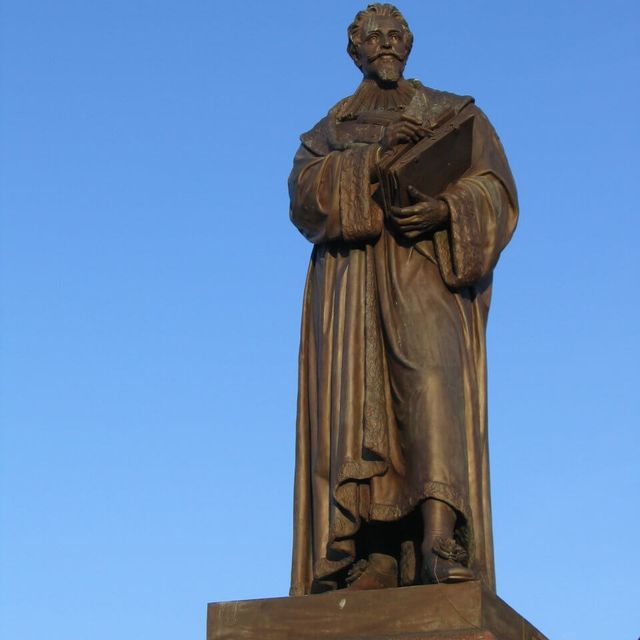
-
Stadhuis - Oranje route
Stadhuis - Oranje route (Stop 4)
THE TOWN HALL The medieval town hall burnt down in 1618. Hendrick de Keyser was commissioned to rebuild it. The new town hall was completed in 1620 as a very balanced, almost...
Markt 87
2611GS Delft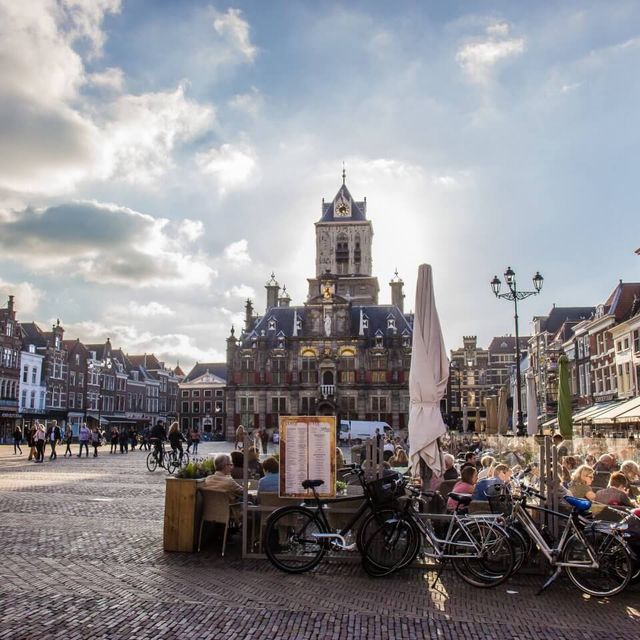
-
Oude Delft 155 - Oranje route
Oude Delft 155 - Oranje route (Stop 5)
Former residence Prince Friso
Old Delft
2611HA Delft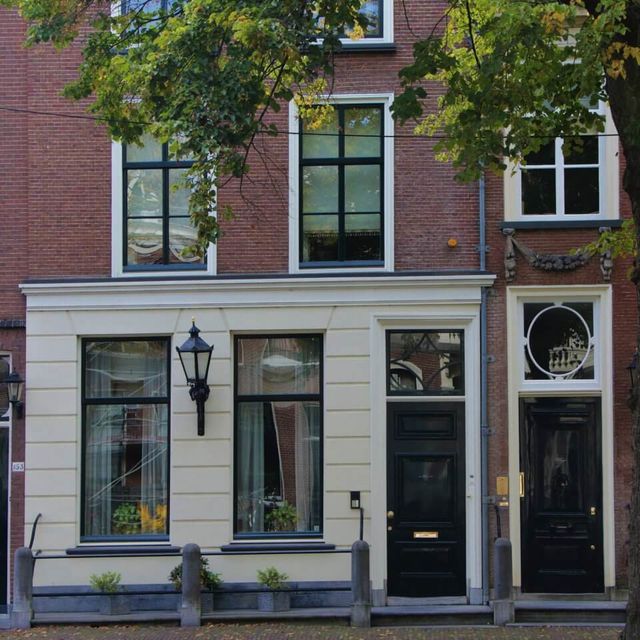
-
Gemeenlandshuis van Delfland - Oranje route
Gemeenlandshuis van Delfland - Oranje route (Stop 6)
'Het Huyterhuis'; around 1500 Jan de Huyter had this house with the natural stone façade built.
Oude Delft 167
2611HB Delft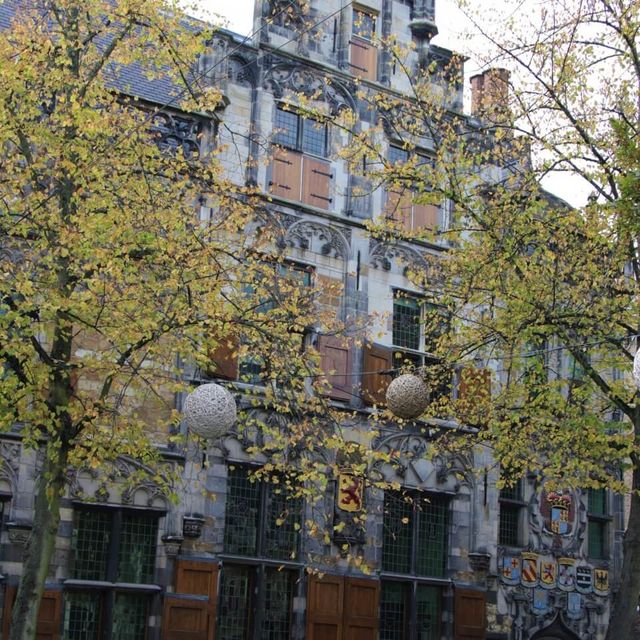
-
Oude Kerk - Oranje route
Oude Kerk - Oranje route (Stop 7)
The Oude Kerk, also called the Oude Jan or Scheven Jan, is one of the two large old churches in Delft.
HH Geestkerkhof 25
2611HP Delft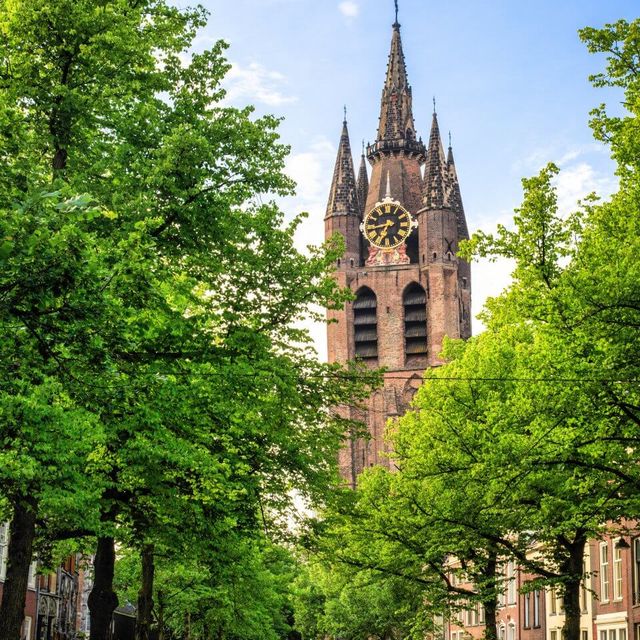
-
Het Prinsenhof - Oranje route
Het Prinsenhof - Oranje route (Stop 8)
Please note! Museum Prinsenhof Delft will be temporarily closed from 6 January 2025 due to renovation work. For more information, visit the Museum Prinsenhof Delft website.
Info point Museum Prinsenhof Delft
Sint Agathaplein 4
2611HR Delft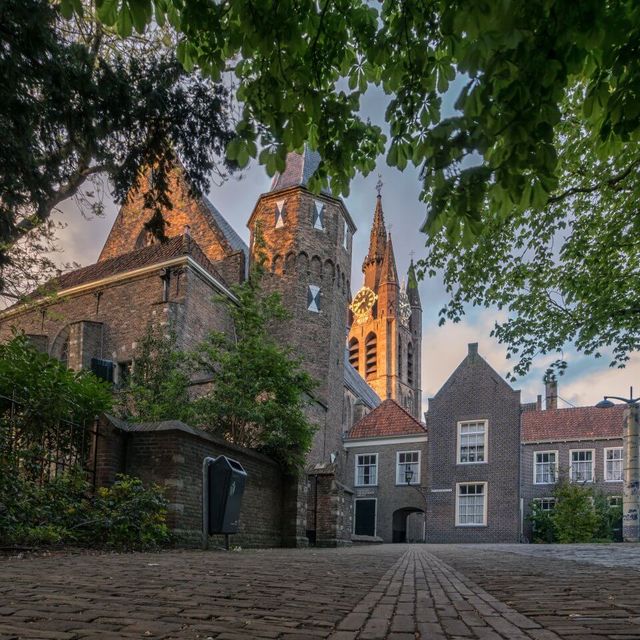
-
Waalse Kerk - Oranje route
Waalse Kerk - Oranje route (Stop 9)
Due to the renovation of Museum Prinsenhof Delft, the Waalse Kerk is temporarily closed.
Oude Delft 177
2611HB Delft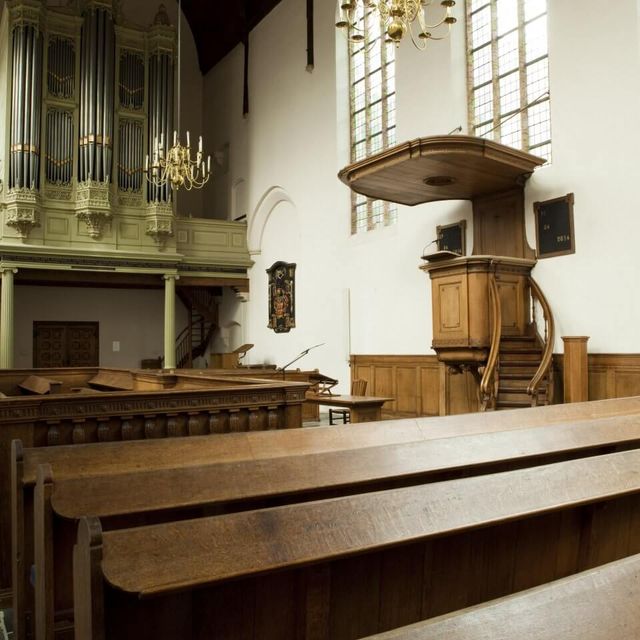
-
Diamanten Ring - Oranje Route
Diamanten Ring - Oranje Route (Stop 10)
The current City Bakery De Diamanten Ring used to be inn 'De Diamant'.
Choorstraat 9
2611JD Delft
-
Royal Delft - Oranjeroute
Royal Delft - Oranjeroute (Stop 11 – Final stop)
Delft Blue and Orange
Rotterdamseweg 196
2628AR Delft
Navigate to end point