
William of Orange
And his special bond with the city of Delft


William of Orange is inextricably linked with Delft. Not just as 'Father of the Fatherland', but also because in 1572 he took up residence in the Sint-Agatha convent, later to become the Prinsenhof. In 2026, his story is once again in the spotlight with the musical Willem van Oranje premiering in Delft. Discover his eventful life here and where you can still see his Delft traces today.
Back in time - to 1533
In 1533, William of Orange was born in the German town of Dillenburg. At the age of 11, he inherits the French principality of Orange and important properties of Holland from his cousin. Charles V attached two conditions to the inheritance: William must adopt the Roman Catholic faith and be raised at the court in Brussels. Because of the importance of the inheritance, William and his parents agree.
William begins his career in the service of the Roman-German Emperor Charles V. It turns out that the young prince can manage very well. His attitude to life is characterised by optimism and eloquence. And he appears to possess diplomatic gifts, which is why he is nicknamed 'William the Silent'. Not because of silence, but because of his habit of never showing the back of his tongue.

Eighty Years' War
Differences of opinion with Charles' successor, the Spanish king Philip II, eventually lead to the Eighty Years' War. William of Orange successfully leads the revolt against the Spaniards, which eventually creates an independent Netherlands from the Northern Netherlands.It forms the basis for our parliamentary unitary state and the principles the Dutch are so proud of: freedom of religion and free speech.
The assassination
In 1572, William of Orange moved into the Sint-Agatha convent, which was later renamed Prinsenhof (the current Museum Prinsenhof Delft). He chooses Delft because the city is one of the best defensible cities in Holland.
In 1580, Philip II offered a reward for the murder of William of Orange. From then on, there are several failed attempts, until 10 July 1584. On 10 July 1584, William of Orange is having lunch with the mayor of Leeuwarden at the Prinsenhof. Afterwards, he wants to walk up the stairs to his bedroom/workroom, but is shot dead on the spot by Frenchman Balthasar Gerards. His last words in French are: "My God, my God, have mercy on me and on this poor people". You can see the two bullet holes and an imitation of the murder at Museum Prinsenhof Delft.


Balthasar Gerards
The night before the assassination of William of Orange, Frenchman Balthasar Gerards spent the night in an inn in Delft. This inn is now a city bakery 'de Diamanten Ring' where you can buy delicious sandwiches (highly recommended!). On the deliberate 10 July in 1584, Balthasar Gerards left here, early in the morning with two loaded pistols to use them to commit the murder of William of Orange. The first-floor window above the shop seen from the street side is said to be the room where Balthasar Gerards spent the night.
The French assassin was arrested and imprisoned soon after the assassination. If you committed a crime in Delft in the Middle Ages, chances were you would be locked up in the city prison, Het Steen, located in the 16th-century Town Hall. So was Balthasar Gerards. He was locked up, tortured and sentenced to death.
Join the thrilling tour of the city prison!

Pieter van Foreest
In 1558 Pieter van Foreest is appointed Delft's city physician. Eventually, he also became William of Orange's personal physician. When William of Orange was murdered, Pieter van Foreest performed the autopsy and embalming together with colleague Cornelis Busennius. There are still several buildings in Delft where Pieter van Foreest lived and worked.
Tomb
William of Orange was interred in the Nieuwe Kerk. At first this was a sober grave, but later it was decided that this was not honourable enough. In 1614, the Amsterdam architect and sculptor Hendrick de Keyser was commissioned to design a new tomb. You can still admire this imposing tomb today in the Nieuwe Kerk.
Museum Prinsenhof Delft
Want to discover more about the life of William of Orange? Then visit Museum Prinsenhof Delft. Here you will learn everything about his life, his dramatic death and his legacy.
Please note! Museum Prinsenhof Delft will be temporarily closed from 6 January 2025 due to renovation work. For more information, visit the Museum Prinsenhof Delft website.
More information

Experience the musical William of Orange in Delft
The musical William of Orange can be seen in Delft and brings to life the story of William of Orange at the place where much of his history took place. A visit to the performance can easily be combined with an exploration of the city. Walk past the Prinsenhof, where William lived and was murdered, visit his mausoleum in the Nieuwe Kerk and explore the historic city centre that is inextricably linked to his life. This way, you experience the story not only in the theatre, but also in Delft itself.
View musicals and tips in Delft

More stories about William of Orange in Delft
William of Orange left deep scars in Delft. In these blogs you can read more about his life, his choices and the places in the city that still remind us of him today. From historical events to current ways of experiencing his story: discover how William of Orange and Delft are inextricably linked.
-
24 hours in Delft: William of Orange

With this 24-hour programme, you follow in the footsteps of William of Orange and enjoy good food, special experiences and luxury.
-
Who was William of Orange really, beyond the myth?

William of Orange is everywhere, including Delft. But who was he really, beyond the myth of the Father of the Netherlands? The podcast William of Orange - the man behind the myth presents a surprisingly human portrait.
-
Musical Willem van Oranje is a performance about a complex man
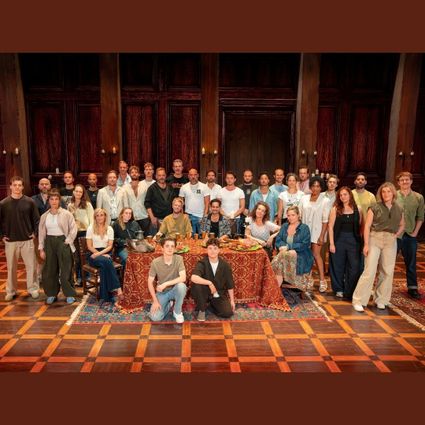
Director Theu Boermans is bringing the story of William of Orange to life in a grand musical in Delft. In this interview, he explains why William is not a classic hero, but a complex man full of contradictions. A story about power, g