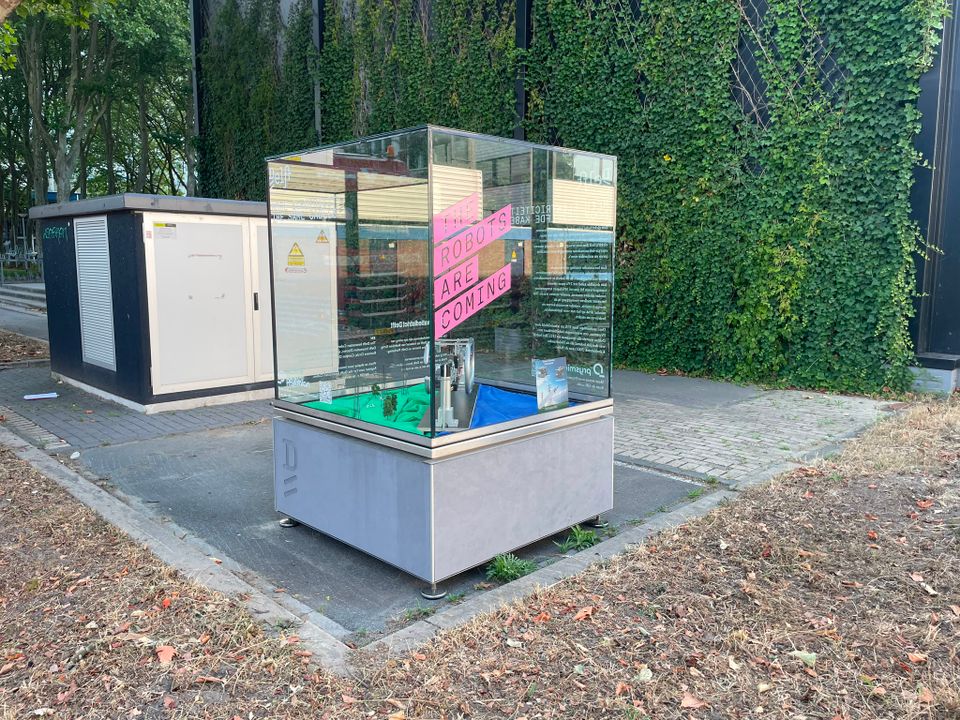
The Robots Are Coming
In the Delft Innovation Cubes
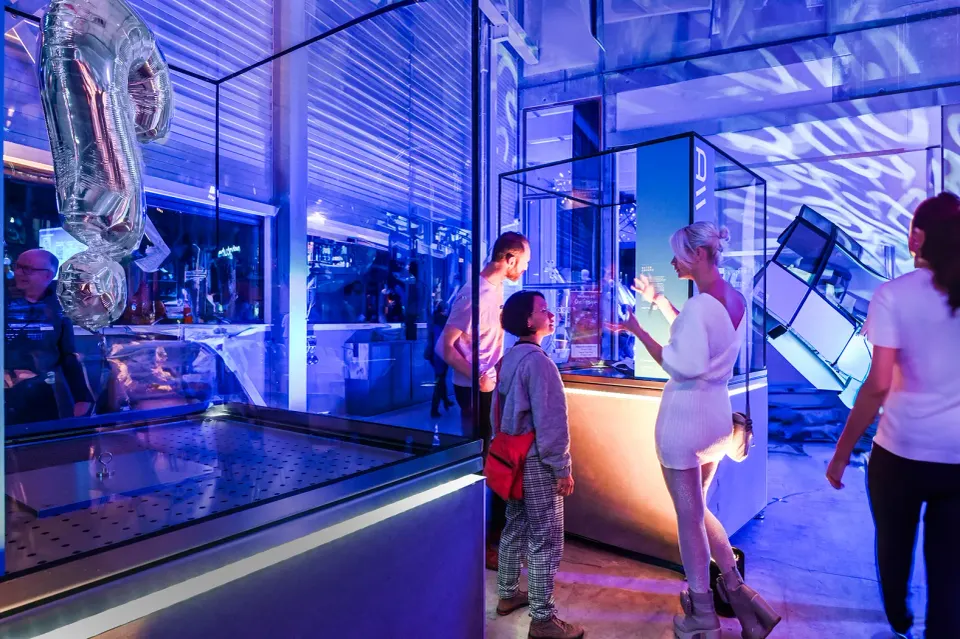
Delft has been a city of innovators for centuries. From pioneers such as Antoni van Leeuwenhoek and Agneta Matthes to today’s entrepreneurs, researchers and creators: innovation is in the city’s DNA. The Delft Innovation Cubes were developed to showcase this strength in public spaces.
The innovation cubes serve as a showcase for the innovations emerging in Delft. At various locations across the city, visitors, residents and professionals are introduced to innovative ideas, products and technologies that contribute to the world of tomorrow. In this way, the cubes bring the stories behind Delft’s innovations to the fore and demonstrate how Delft continues to build the future.
The second round of the Delft Innovation Cubes is partly themed around ‘The Robots Are Coming’. Robots and smart technology are playing an increasingly significant role in our daily lives. From healthcare and mobility to industry and sustainability: innovative robot applications help tackle societal challenges and make work safer, more efficient and smarter.
With this theme, the innovation cubes showcase how Delft is at the forefront of robotics and high-tech innovation. Discover the stories behind three remarkable innovations and meet the people and organisations who are making history today.
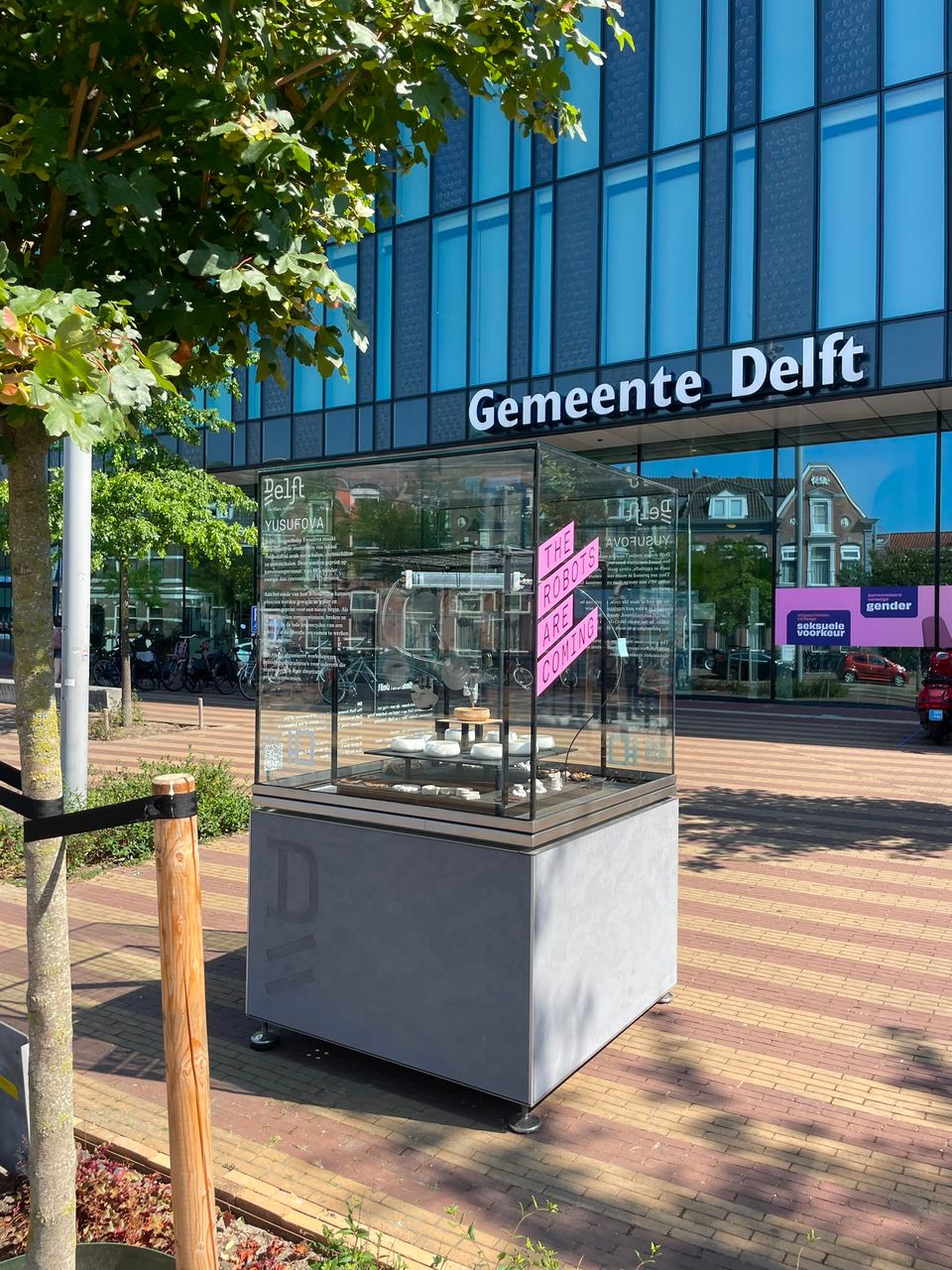
Waste-free printing
Delft-based design studio Yusufova produces bio-based materials from local food waste such as eggshells, citrus peel and nut shells. These are printed at room temperature, using 98 per cent less energy than conventional 3D printing.
At the end of their life cycle, objects can be soaked in water and reprinted for a new beginning. If they are not recovered, they break down safely. Throughout a product’s entire life cycle, the philosophy is to work in harmony with nature.
The studio organises workshops and training programmes for anyone curious about sustainable production processes.
Location: Delft Town Hall – Stationsplein 1
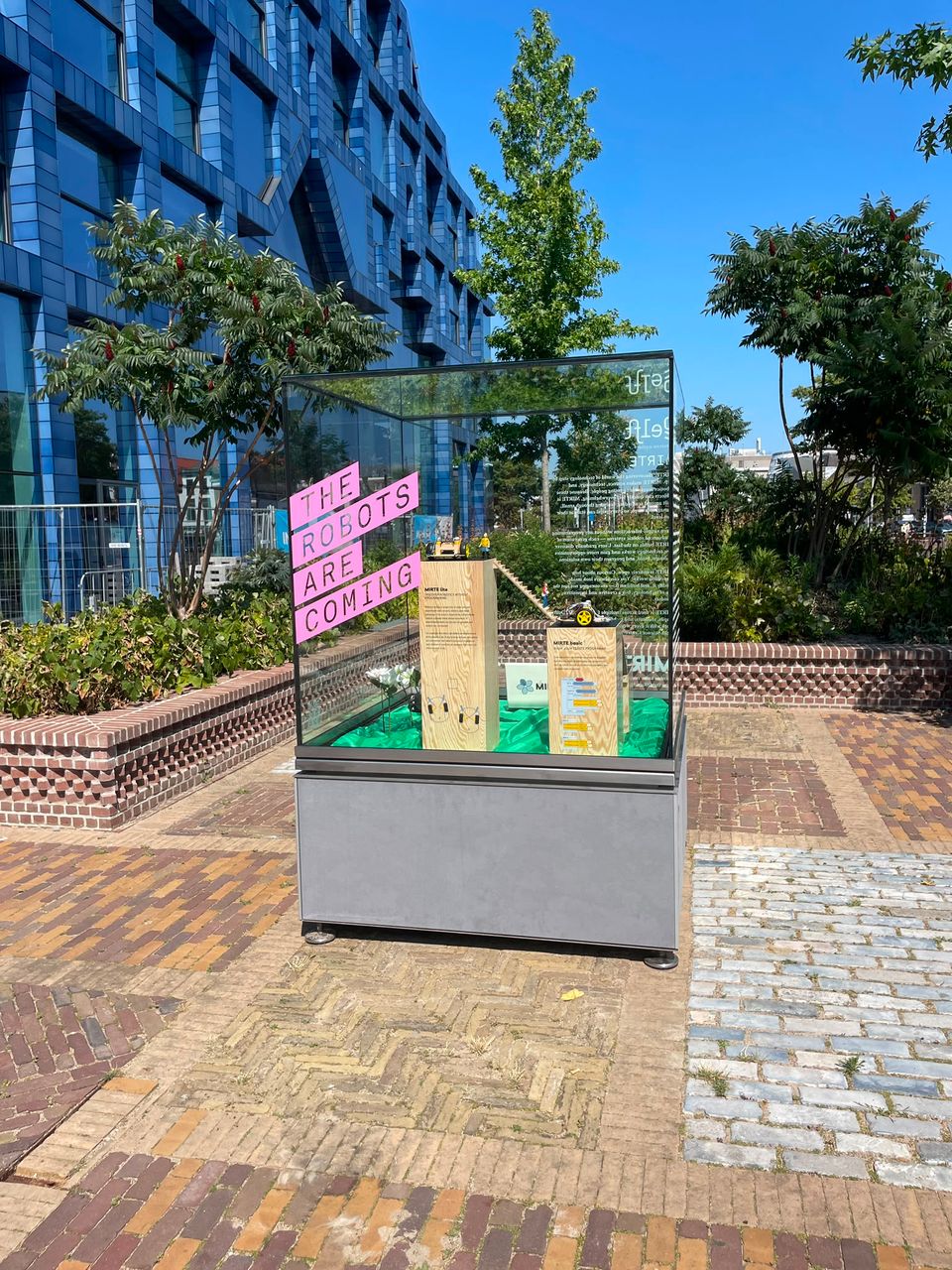
MIRTE: discovering the world of technology step by step
MIRTE makes science, technology and robotics accessible to young people. As these subjects can quickly seem complex, MIRTE is structured according to the principle of scaffolding: learning in small, manageable steps, allowing each pupil to start at their own level.
From simple interactions requiring no programming to advanced robotic systems — each generation of MIRTE builds on the previous one. Users gradually discover how technology works and are given ever more opportunities to design, build and programme for themselves.
MIRTE has been developed entirely using the ‘ open ’ approach. Curious about how something works? You can always view it, customise it and build on it further. In this way, we encourage not only the use of technology, but also an inquisitive and creative mindset.
MIRTE is used across several faculties at TU Delft. School pupils, university students and anyone else interested can get to grips with it every week during workshops at the TU Delft Science Centre.
Location: Innovation Gallery – Houttuinen 6, Delft
More electricity through the same cables
Charging an electric car, streaming a film, switching on the heat pump… These are just a few examples of how our daily lives require more electricity than ever before. But building a completely new energy infrastructure takes decades and costs billions of euros.
A ceramic coating on existing overhead power cables could change that. By reducing heat build-up in the cables, the same cable can carry up to 25 per cent more power at a temperature up to 30 per cent lower, without the need for new pylons or new routes. This means faster progress in the energy transition, fewer power shortages and less strain on the grid for households, businesses and cities. This technology is called E3X and was developed by Prysmian, a global cable manufacturer with roots in Delft dating back to 1913. At the time, the company was known as the Nederlandse Kabelfabriek (NKF) on the River Schie.
Location: Prysmian Cables and Systems B.V. – Schieweg 9, Delft