Robot Portraits – Wanda Tuerlinckx
Robots
The Robots Are Coming – Delft 2026
Robot Portraits – Wanda Tuerlinckx
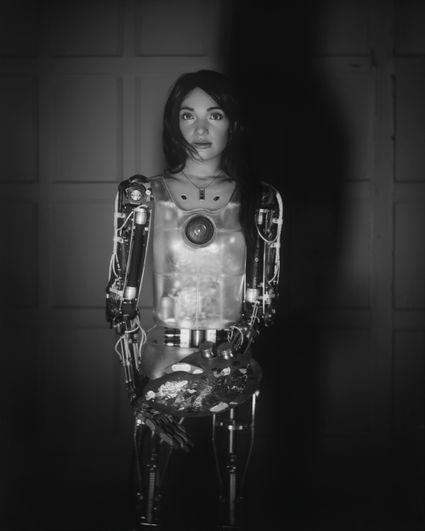
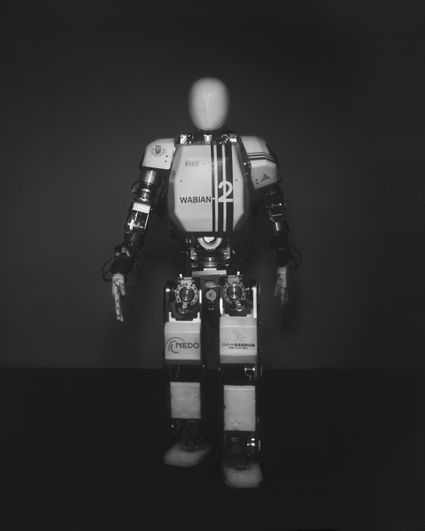
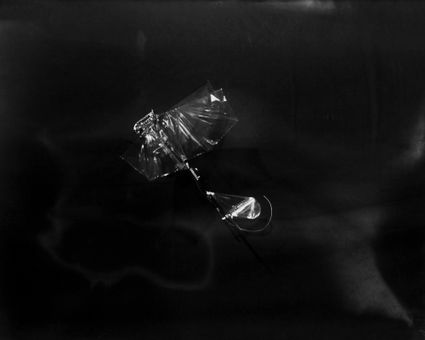
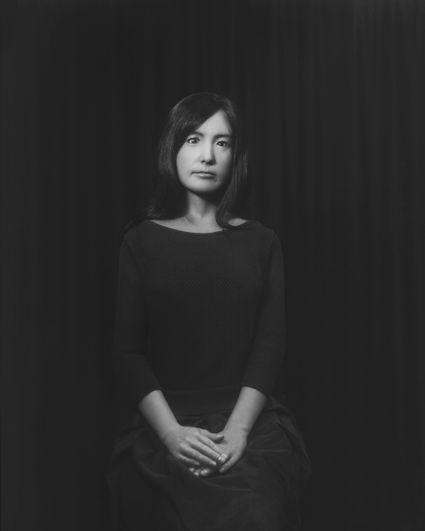
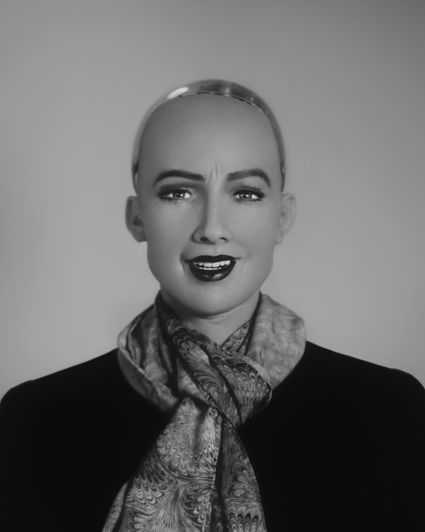
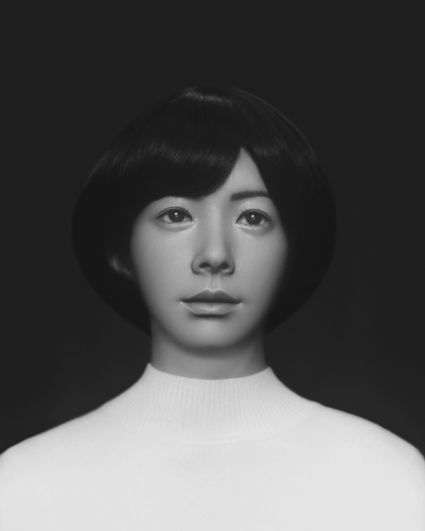
Wanda Tuerlinckx captures robots using a 180-year-old camera to portray these new technological wonders across the boundaries of time in a historical and scientific manner. In collaboration with Erwin R. Boer, a scientist specialising in human-machine interaction, they travel the world to document the revolutionary developments in robotics; the fascinating evolutionary transformations of biomimetic robots that mimic the efficient physical function and form of humans and nature, from humanoids with human-like bodies and human capabilities to androids that resemble humans in every respect and incorporate many of the cognitive and social interaction capabilities of humans.
Androids
The current technological revolution is, for the first time in history, bringing physical – and perhaps also spiritual – life to the fruits of our inexhaustible imagination: android robots, which look and behave like humans but are essentially machines with a human appearance, are capable of highly human-like emotional, facial and physical expressions. Androids are intriguing, but their subtle imperfections also make them seem eerie. The Japanese robotics researcher Masahiro Mori described this phenomenon in 1970 as the ‘Uncanny Valley’, a valley that indicates that their complex behaviour is sometimes deeply unsettling to people; these disturbances are caused by unrealistic human expectations projected onto these highly advanced, human-like machines.
The androids offer a multitude of experiences in the field of human-robot interaction that were unthinkable for decades. Nowhere is the human element in science so strongly emphasised as in the embodiment of a humanoid robot. Through the convergence of robotics, artificial intelligence and materials science, designers and researchers can experiment with the ultimate question: what does it mean to be human?
Humanoids
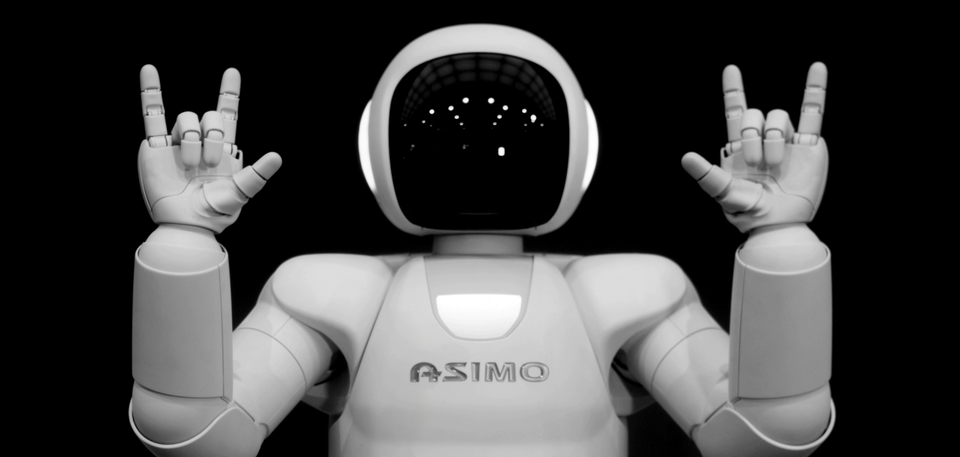
The Industrial Revolution replaced a large proportion of human labour with robotic machines. These machines were able to perform tasks originally intended for human workers. These early industrial robots did not resemble humans, and the spaces in which they were deployed had to be redesigned. Later, we realised that if we build robots in human form and endow them with many of the human sensory and motor skills, they can be deployed more easily in places where people are employed. This is particularly true when human labour is scarce, dangerous, physically demanding or extremely tedious. Unlike when industrial robots were first introduced, the spaces where human labour takes place no longer needed to be completely redesigned. They can be integrated into society more easily. Examples of humanoids working just like humans include nurses in hospitals assisting patients, communicating with autistic children or people with dementia, stocking shelves in supermarkets or teaching dance classes. These robots often feel hard and stiff to the touch and lack any capacity for meaningful social interaction. If robots were to become a truly integral part of a society in which humans and robots work and live together, they would also need to become more human in their cognitive and social abilities. This has led to the evolutionary branch of android robots.
Biomimetics
Through evolutionary processes, humans and virtually all living creatures have developed incredible functionalities with astonishing efficiency. Scientists and engineers have recognised this and are successfully attempting to replicate what biology has devised as sustainable solutions to specific needs. For example: how do you design a robot that can walk whilst consuming a minimum of energy? These days, companies such as Boston Dynamics are succeeding in making their humanoid robots approach human levels of efficiency. They have achieved this by closely studying how humans walk. Many laboratories at universities and in industry have developed all kinds of biomimetic robots, ranging from human legs that walk without using any energy, to robotic geckos that climb up glass walls, to flying birds and buzzing insects.
For more information, visit this page: www.wandatuerlinckx.com
Instagram: wandatuerlinckx.robots.