Explore
the stories behind the stones
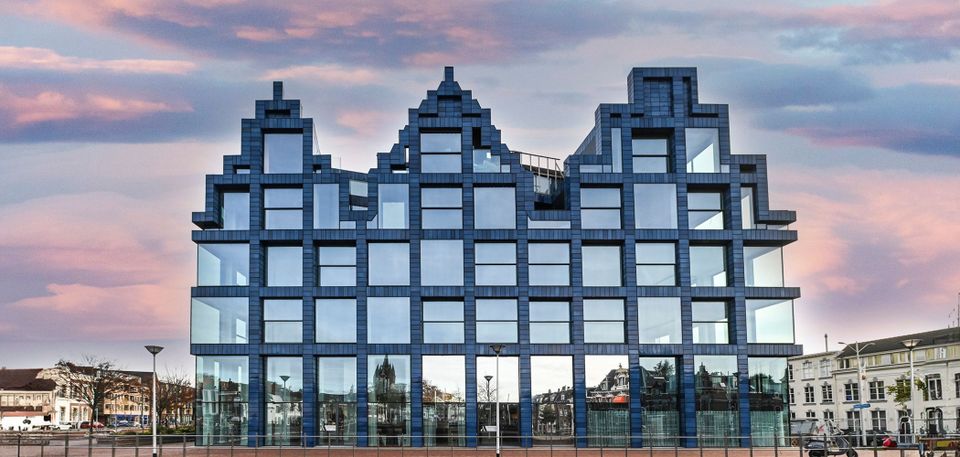
Each space in the House of Delft tells its own story. Together, they form a voyage of discovery through the city's past, present and future. In a building where modern architecture meets historical references, various rooms invite you to experience Delft your way.
From centuries-old heritage to today's innovative ideas: here you can see how history is preserved, made and passed on. As you move through the building, you will discover stories that are sometimes centuries old and sometimes just beginning. So in every room you experience what Creating History means in Delft.
In conversation with Artist Job Smeets reveals how he brings thousands of stories and centuries of history to life in three artworks
Constantijn Huygens Gallery
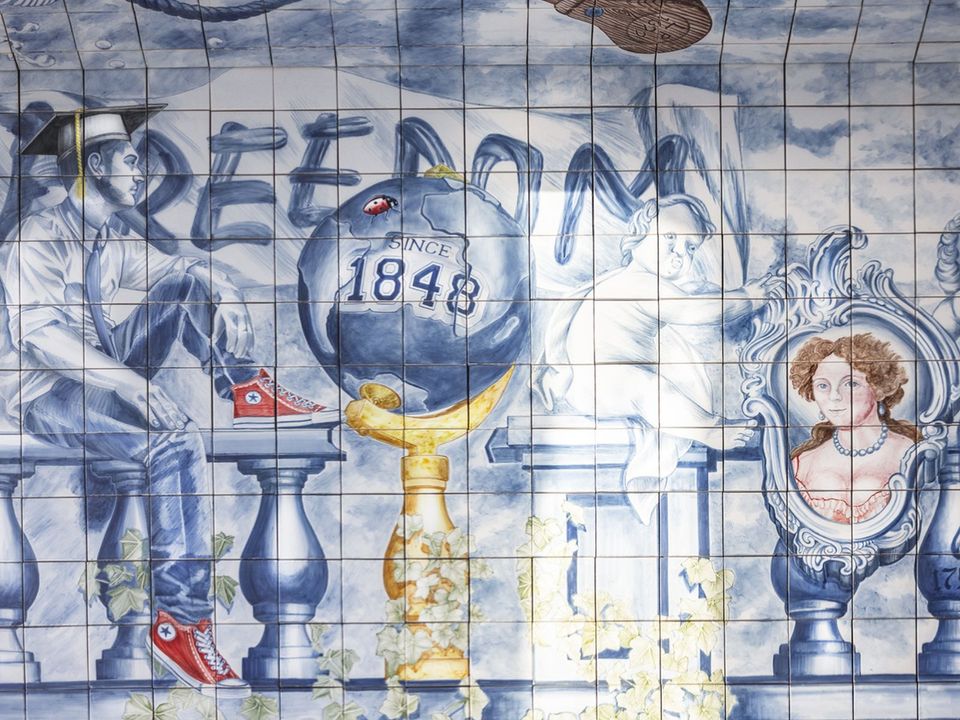
Here you step into Delft, through hundreds of stories. Look up and around you: walls and ceilings are completely covered with Delft blue tiles, specially made by Royal Tichelaar Makkum. Together, they form an indrukwekkend panorama that tells a rich and layered story about the City of Princes. Each tile contributes to a visual journey through the history, culture and identity of Delft.
During your walk through the Blue Gallery, you will discover Delft through the ages. You will recognise pioneering inventions, defining moments in the city's history and the brilliance of the Golden Age. Think trade, science and art, but also the daily lives of ordinary inhabitants. At the same time, the dark side has not been forgotten. Themes such as power struggles, inequality and forgotten stories are also given a place here. The Blue Gallery shows that history is never a single story, but always consists of multiple perspectives and interpretations.
Artist Job Smeets designs this place as an almost sacred space of wonder. You don't have to know anything or believe anything sacred to wander around here: everyone is welcome to enter and stay. Stand back and experience the whole, or just pick one tile, zoom in on the details and discover unexpected scenes.
Some images deliberately play with the boundary between fact and imagination. What really happened and what is interpretation? As you watch, you are invited to reflect on how history is recorded and passed on. Job Smeets stimulates you to be critical: "Fake news is of all times, so ask yourself, did this really happen?"
Innovation Gallery
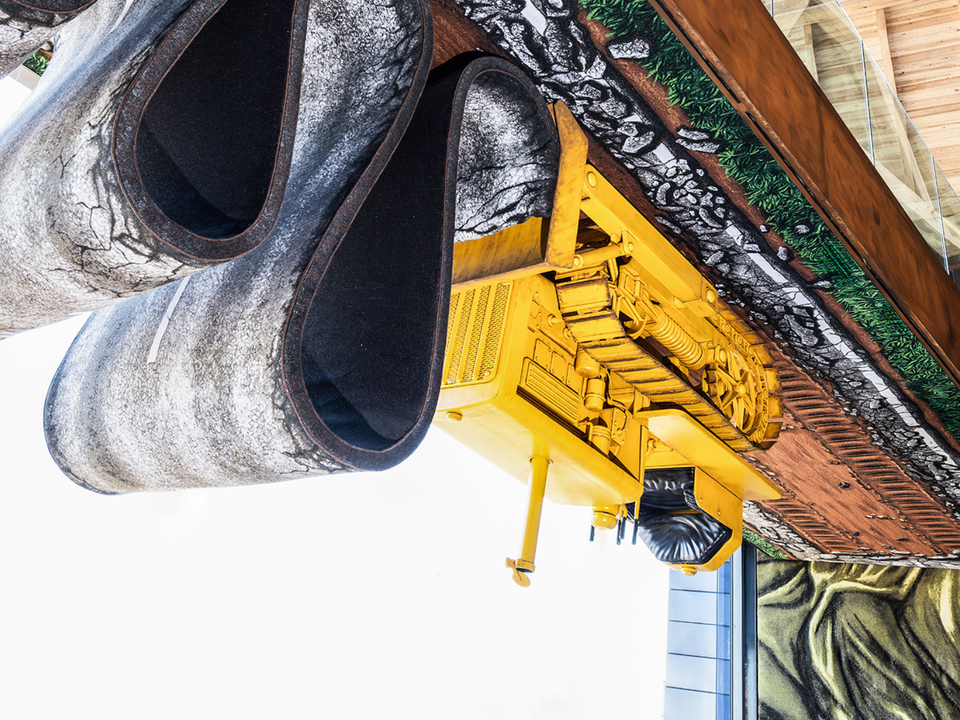
This is all about innovation, technology and the future. This is a place where Delft looks ahead and showcases the world of tomorrow: medical devices, robots and groundbreaking inventions from TU Delft. This is the setting that shows how science and creativity come together. At the same time, this does not happen in a classic, rigidly designed exhibition hall, but rather in an environment that feels surprisingly playful and lively.
The Innovation Gallery is open and full of life, almost as if you were in an outdoor place, but inside. Historical references and modern objects coexist here. On the wall, for instance, you see a fragment of the facade of the Nieuwe Kerk, making Delft literally present in the setting of progress. Thus, the connection between inside & outside and history & future is made tangible.
Artist Job Smeets sees this space not as a traditional exhibition hall, but as a place reminiscent of a market square. Just as people used to present their wares and ideas in the heart of the city, new technological developments are shared with visitors here. It is a meeting place where curiosity is central.
Atmosphere also plays an important role. Here, Job Smeets pays tribute to Johannes Vermeer, not with Delft blue, but with light, texture and stillness. Woven wall panels, made in cooperation with the Textielmuseum in Tilburg, give the room a special look and also improve the acoustics. This creates an environment that feels both futuristic and nostalgic. Job Smeets invites you to look and ask yourself, "Do you also smell the scent of Vermeer's oil paint?"
Jan Schoonhoven Theatre
Presentations, talks and events take place here; in a space that exudes tranquillity and excitement at the same time. The auditorium, called the Jan Schoonhoven Theatre by artist Job Smeets, is a place for meeting, contrast and inspiration.
As you look around, you will discover a play of order and chaos. The room is named after Delft artist Jan Schoonhoven, known for his minimalist work and rigid structure. You can see that influence in the design: a clear grid as a base, with porcelain sculptural forms reminiscent of acoustic panels. At the same time, nature grows through the space. Lilies, inspired by the Delft canals, appear on the walls, along with small plants and weeds, as if nature is slowly taking back the building.
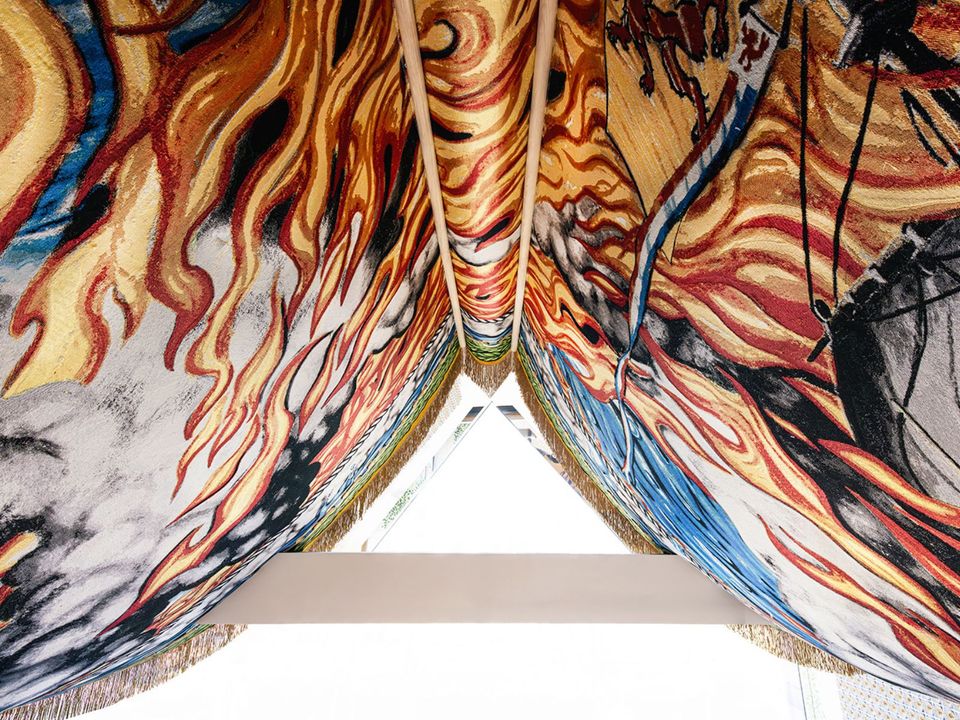
Artist Job Smeets sees this space as both a functional room and a work of art full of symbolism and stories. Above you hang an indrukwekkend woven ceiling in which fire and water come together: a flooded tower and a burning ship refer to the elements that make life possible, but can also bring destruction. In details, he hides personal traces, such as a clown shoe or punching bag, making the space intimate and human.
Take your time. Experience the tight structure in its entirety, or wander past the small, unexpected scenes hiding among the porcelain and greenery. The Jan Schoonhoven Theatre invites you to reflect on the balance between order and chaos, between human design and nature that always returns. In doing so, Job Smeets asks, "What happens when a space is not only a place, but also a living story?"